
Odoo vs Custom Software: Which Approach Suits Your Business?
An objective decision framework comparing pre-built modular ERP architecture against bespoke software development for growing mid-market enterprises.
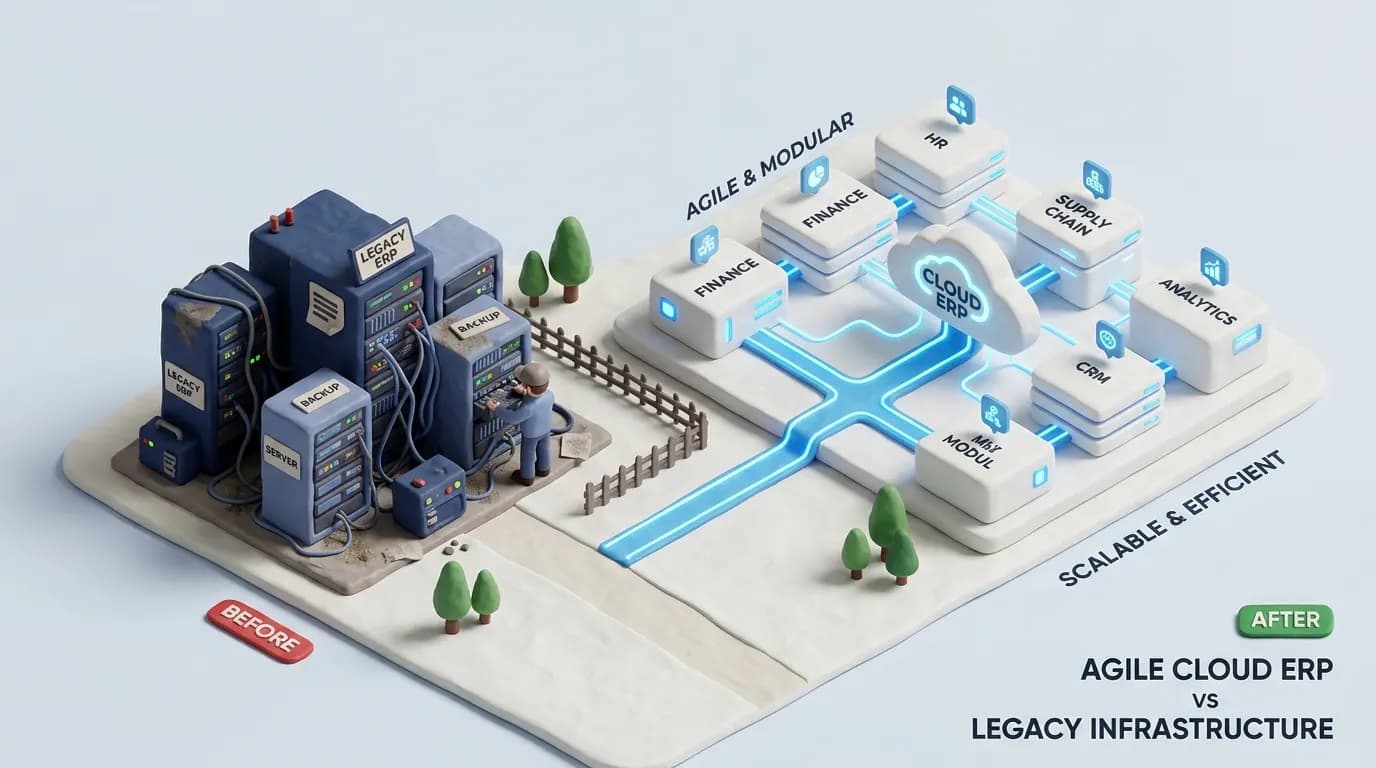
When mid-market businesses outgrow disjointed spreadsheets and basic accounting tools, executive teams face a critical architectural fork in the road: should you implement an extensible modular platform like Odoo ERP, or build custom bespoke software from scratch? This guide outlines the commercial trade-offs, cost drivers, time-to-value, and risk profiles of both strategies.
1. The Core Trade-off: Time-to-Value vs. Absolute Tailoring
Custom software offers complete freedom: every button, database column, and workflow is crafted precisely to your specifications. However, this flexibility comes with an immense hidden cost: rebuilding thousands of non-differentiating features that modern ERP systems have perfected over decades.
Double-entry ledgers, currency conversions, FIFO/LIFO valuation rules, and barcode picking are standardized business mechanics. Developing them in-house ties up senior engineering talent on commoditized table-stakes instead of revenue-generating innovations.
“Unless your operational workflow is your primary competitive moat, building an ERP from scratch is an expensive way to recreate standard business software.”
- Odoo accelerates go-live from 12–18 months down to 90–120 days
- Custom builds require dedicated product management, QA, and security auditing teams
- Odoo benefits from millions of real-world testing hours across global enterprises
2. Total Cost of Ownership (TCO) & Long-Term Maintenance
Initial software development costs represent only 25–30% of lifetime software expenditures. The remaining 70% is consumed by ongoing operating maintenance: dependency updates, security patches, evolving regulatory tax mandates, and API connector breakage.
With Odoo Enterprise, maintenance of the underlying framework and core apps is managed upstream by Odoo, dramatically reducing internal support overhead.
3. The Hybrid Consensus: Standardized Core with Custom Extensions
The most successful high-growth enterprises adopt a hybrid approach: they anchor core finance, manufacturing, and inventory on Odoo, and develop bespoke custom applications or customer-facing portals that connect via Odoo’s comprehensive API suite.
This guarantees transactional reliability for financial audits while preserving unlimited freedom on proprietary client-facing experiences.
Strategic Key Takeaways
Executive Action Checklist
Ready to implement these architectures in your enterprise?
Our senior practice leads provide tailored technical roadmaps and guaranteed implementation delivery.
Samir Patel
Principal Enterprise Architect at Akshar Group Technologies. Specializing in enterprise architectural design, ERP migrations, and intelligent workflow automation.
Related Strategic Playbooks
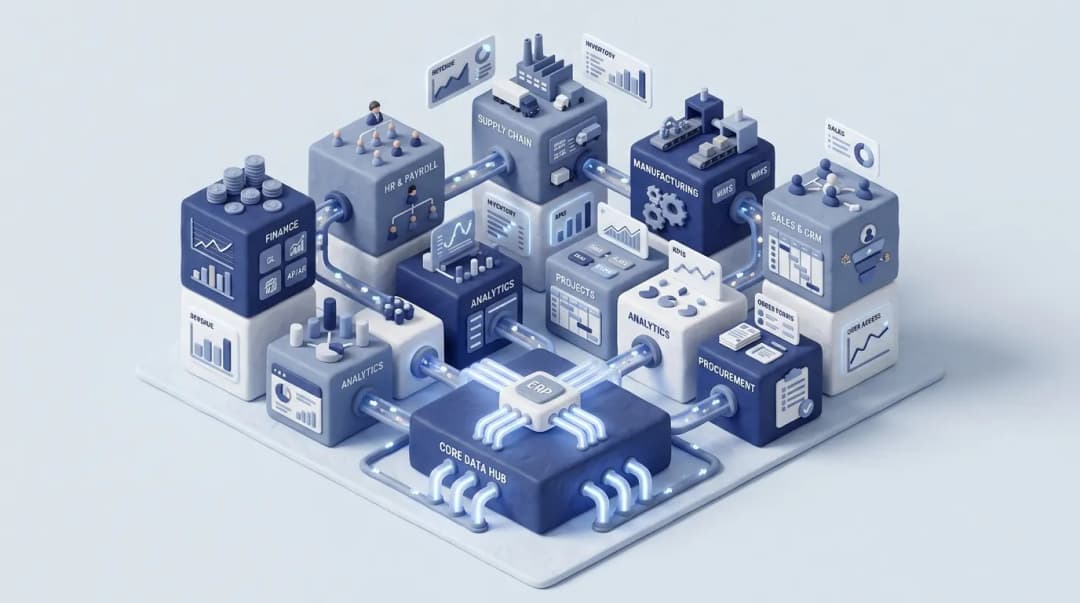
How to Know When Your Business Has Outgrown Its ERP
Key warning signs that spreadsheets and fragmented legacy tools are creating hidden operational bottlenecks and margin leakages.
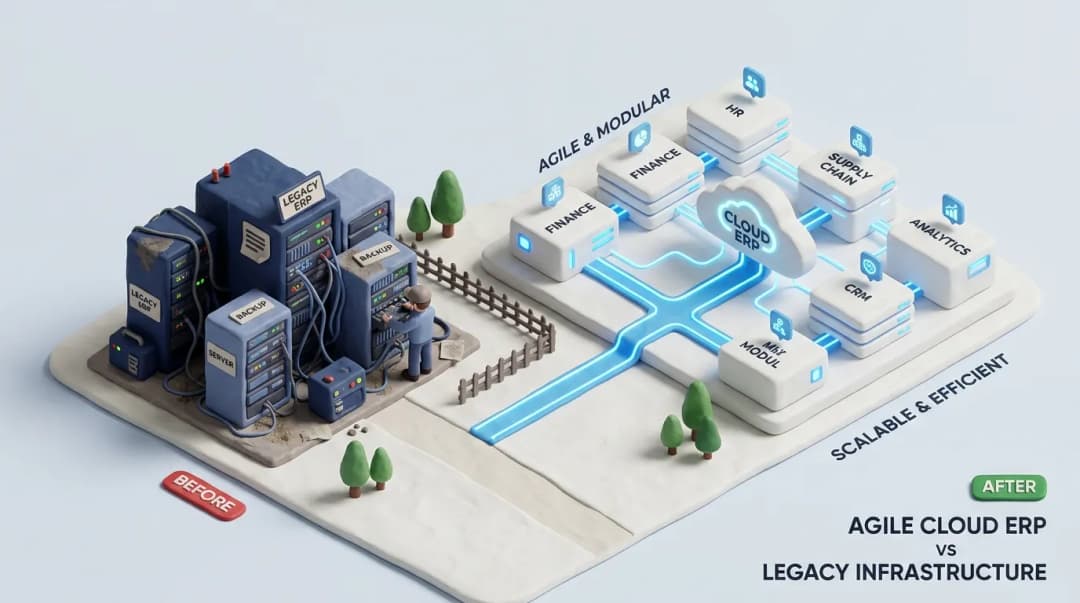
Odoo vs Legacy ERP: When Should You Make the Move?
Evaluating total cost of ownership, modular customizability, and operational agile workflows when migrating from legacy on-prem systems.
What's Holding Your Business Back?
Tell us where you want to go, what's getting in the way, and we'll help you figure out the technology to get there.